
Why Do Many Candle Factories See Increased Orders but No Rise in Profits?
After expanding their production capacity, many large-scale candle factories eventually encounter a common problem: while orders increase and equipment becomes more advanced, profits fail to show any significant improvement. The root cause is often not a lack of sales, but rather the fact that production losses have been severely underestimated. In the candle industry, the true profit-eaters are rarely the fluctuating prices of paraffin wax itself; instead, they are the minor losses that occur daily—such as repeated reheating of wax, product cracking requiring rework, deformation during transport, instability in automated production lines, and quality variations between different production batches. Viewed in isolation, the impact of these issues may seem negligible; however, once production scales up, these losses are rapidly amplified. Through its long-standing service to large, export-oriented candle factories, Junda Wax has observed that an increasing number of mature manufacturing facilities are shifting their focus: rather than merely asking, Can we produce it? they are now prioritizing the critical question, dddhhhHow can we minimize long-term production losses?dddhhh
Enhancing Paraffin Wax Stability
When sourcing paraffin wax, the primary metric many factories initially compare is price. However, once they transition to large-scale production, they quickly realize that wax stability is often far more critical than a low price point. Significant fluctuations in the melting point, penetration value, or oil content between different batches of paraffin wax can easily lead to inconsistent candle dimensions, variable cooling times, surface cracking, and even increased error rates in automated pouring processes. This is particularly true on high-speed production lines, where even subtle variations can be rapidly magnified. What may appear to be a minor discrepancy at the outset can ultimately have a direct and substantial impact on both the yield rate of defect-free products and the rate of necessary rework. Consequently, an increasing number of large-scale candle factories are now placing greater emphasis on the consistency of dddhhhCandle Grade Paraffin Wax,dddhhh rather than focusing solely on procurement costs. Drawing upon its extensive experience in the export market, Junda Wax has similarly prioritized rigorous stability controls across different production batches, thereby helping clients mitigate the risks associated with variability in large-scale manufacturing environments.
Avoiding Repeated Reheating of Paraffin Wax
In an effort to minimize waste, many factories routinely collect leftover paraffin wax and repeatedly reheat it for reuse. In reality, however, subjecting paraffin wax to prolonged, repeated exposure to high temperatures gradually degrades its internal molecular structure.
This is particularly problematic in the production of scented candles, where repeated high-temperature heating can easily lead to:
A diminished capacity to retain fragrance (scent-locking ability).
Discoloration of the paraffin wax (yellowing).
Compromised surface stability.
An increased risk of cracking during the post-production phase.
While such practices may create the illusion of raw material savings in the short term, they frequently result in a subsequent rise in both rework rates and customer complaints. Consequently, many large-scale factories have now begun to strictly control the duration of repeated paraffin heating cycles and to optimize their wax-melting systems to minimize unnecessary exposure to high temperatures. When serving major candle manufacturing clients, Junda Wax takes into account each client's specific production pace to recommend paraffin formulations that are ideally suited for continuous manufacturing processes.
Stable Automated Equipment
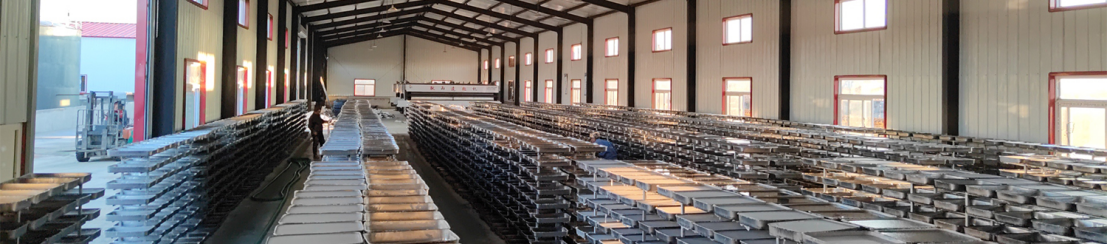
After upgrading their machinery, many factories tend to focus exclusively on maximizing production speed; however, the true determinant of material loss is not merely speed, but rather the stability of the interface between the equipment and the paraffin wax itself. If the paraffin's cooling rate is inconsistent or its fluidity fluctuates significantly, it can easily lead to issues such as automated pouring errors, uneven wax distribution, cutting deviations, and unstable demolding. These problems become particularly pronounced in automated production lines for birthday candles, tea lights, and pillar candles. Increasingly, sophisticated factories are now adjusting their paraffin formulations in tandem with equipment calibration—rather than relying solely on the machinery itself—to ensure optimal performance. With extensive experience serving clients in automated candle manufacturing, Junda Wax provides expert recommendations on the most suitable paraffin specifications based on the specific equipment type, production speed, and product design.
Minimizing Transportation Losses
Many factories focus their attention primarily on the production phase, yet transportation losses actually represent a significant hidden cost.
This is particularly true during summer sea shipments, where high temperatures inside shipping containers can easily lead to:
Candle softening
Surface deformation
Packaging indentation
Fragrance evaporation
Some factories ship products that are in perfect condition, only for issues to arise once the goods reach the customer. Consequently, an increasing number of export-oriented candle manufacturers have begun conducting high-temperature storage tests, simulated transit tests, and packaging compression tests. Drawing on our extensive experience in exporting to various international markets, Junda Wax assists clients in optimizing both their paraffin formulations and packaging strategies—tailored to their specific target markets—to ensure maximum stability during transit.
If you are seeking a more stable solution for Candle Grade Paraffin Wax, or if you wish to enhance the overall stability of your candle manufacturing operations, please feel free to contact Junda Wax at any time. We can help you identify the ideal fully refined paraffin wax and provide a comprehensive, one-stop production support package—customized to your specific product types, equipment configurations, and export markets.
